
By: Anandi A. Premlall, Sustainability Coordinator
Front
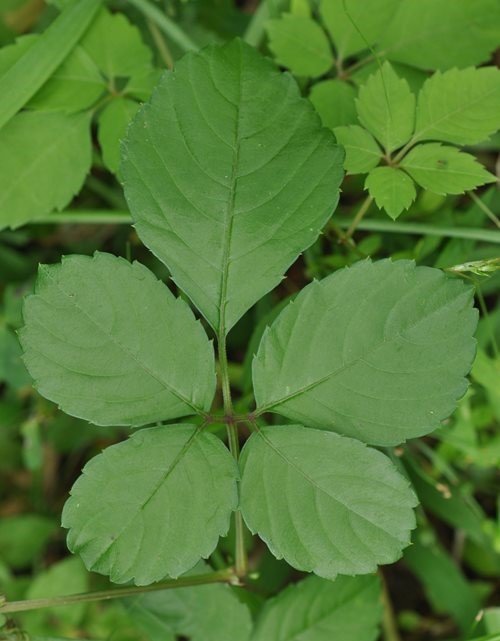
Back
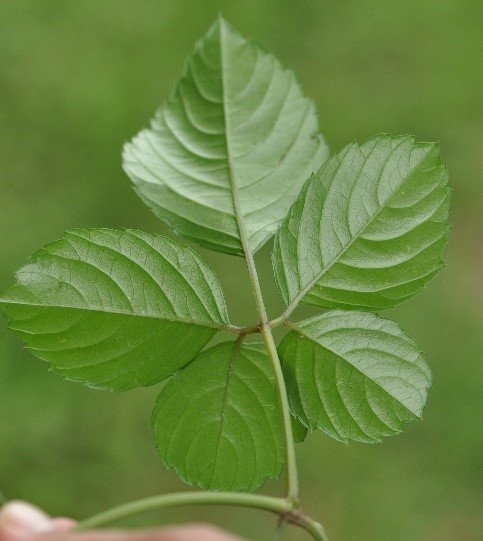
Flowering

Cayratia japonica is a perennial vine of the Vitaceae family (a cousin of grapes!) and has palmately compound leaves that are 1-3 inches long and 0.5-3 inches wide.
Leaflets are ovate and pointed. Cayratia is affectionately known as bushkiller vine and produces flowers that are very small and occur in terminal clusters on panicles; they are orange pink and cup-shaped. Fruits of the Cayratia resemble tiny grapes and have 2-4 seeds each.
In Traditional Chinese Medicine (TCM), Cayratia japonica was to relieve swelling and heat, and to enhance diuresis and detoxification. The boiled leaves, combined with onion and lime, were applied to the head as a remedy for violent headaches. The stem bark is used as an antidote; dried and powdered flowers are used for fever; and aerial parts are applied for fever and malaria.
What makes Cayratia dangerous is that this vine kills native plants and shrubs by blocking light and stressing plants with its weight. It is very difficult to remove once established. The vine can climb up trees and may act as a ladder for forest fire in which flames reach higher and do more damage. Cayratia may also be a host for chilli thrips, Scirtothrips dorsalis Hood, a polyphagous exotic pest that has been identified as a threat to over 20 food crops.
First, we will pull out all the Cayratia vines on the property. Please try and remove them as close to the root as possible. If you can pull up some of the underground roots that will help prevent regrowth. Second, we will solarize the fresh vines and keep them in a separate area exclusively for weeds. Third, we will smother the solarized Cayratia with heavy mulch to help the vines go dormant.
Please join us in keeping Longue Vue free of this unwanted plant by participating in Operation Cayratication!